How did ancient societies grow into successful civilizations with lasting legacies? They used ingenuity and found ways to control the environment and use resources to farm, travel, and trade. All students in the sixth grade were challenged to research, plan, design, and build a simple machine that could be used to move water from the Nile River to the farm land positioned one foot away from the River. Teams of four first created the Nile River Valley; next they watched several videos that explained simple machines and their potential to move things from one place to another. Scaled drawings were created and presented to the "Government Officials" for approval. Finally, a supply table with items including milk jugs, spools, pullies, string, pvc pipe, and wood were made available. Measurements were made on wood and pipe then taken to the "woodworker" for trimming. On competition day, teams were given three minutes in which the Nile was flooded and they were tasked with moving as much water as possible. Two categories were used to select winners: most water moved, and most creative design. On Friday, February 6th the 24 finalists will enjoy an evening of bowling and pizza to celebrate their successes and creativity when faced with a real-life problem.
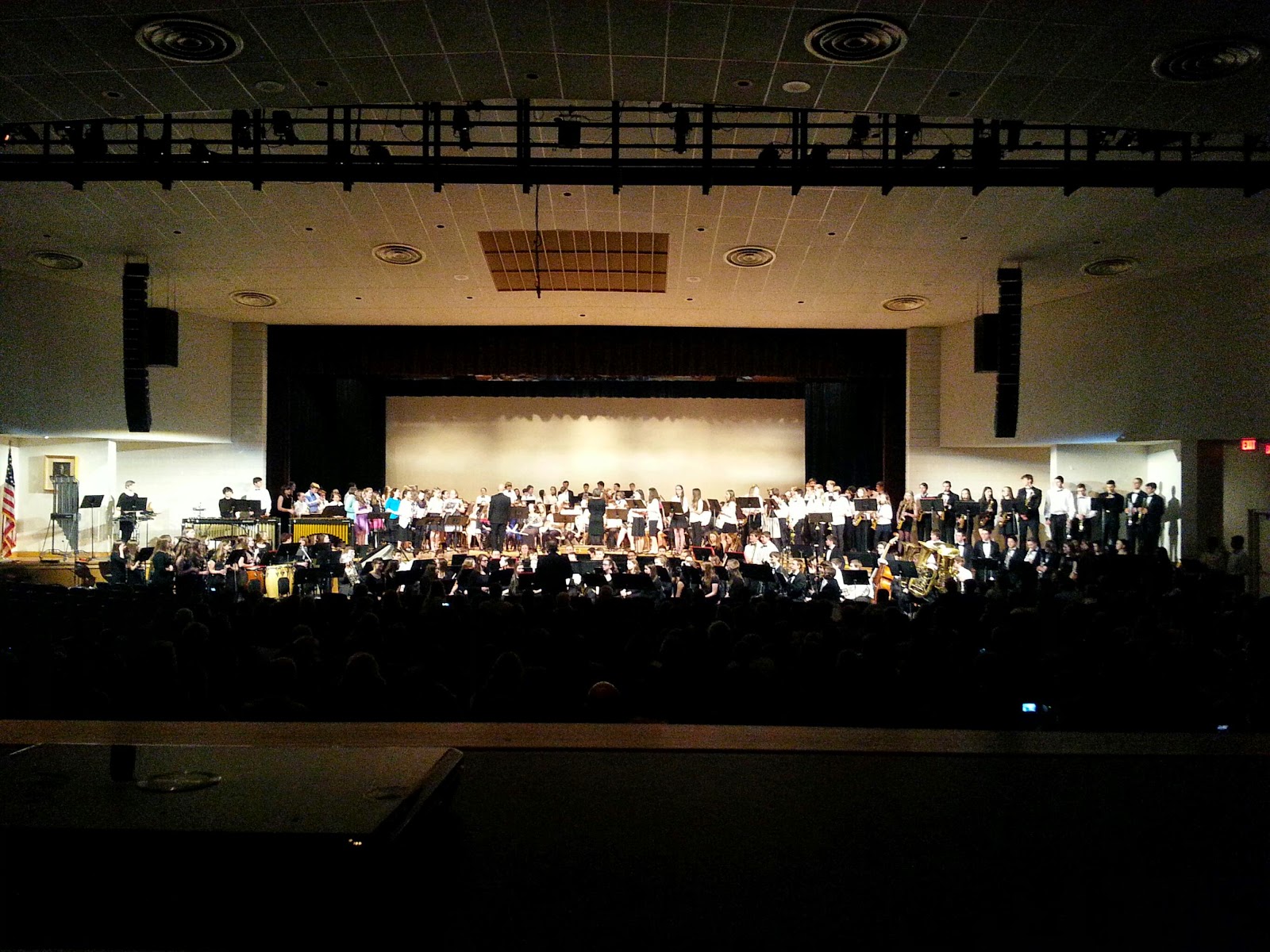
Our Elementary Band, 7/8 Band and Senior High School Bands performed an outstanding concert on Wednesday, February 4th. As is the tradition of the Festival, a guest conductor is invited to work with our students in preparation for the concert and then conduct a few pieces with them during the concert. Our guest conductor was Anthony Joseph.
Mr. Joseph is a retired music teacher whose career lasted 33 years. He taught in the Oswego School District, Schenectady School District and the Maine-Endwell School District.
He received the Syracuse Symphony Orchestra's 2006 Outstanding Instrumental Music Teacher award. Mr. Joseph and his students were featured on Teachers of the Week sponsored by WIXT. He holds several memberships in many music organizations.
We were honored to have him join us and our students for this festival. Thank you Mr. Joseph! He completed his compliments of our instrumental program by saying, "You come here to Marcellus and make beautiful music with beautiful children.
Each band performed a few pieces individually and then, as tradition, concluded with the Marcellus March, composed by John Edmondson. BRAVO!
Congratulations to all our students, Mr. Costa and Mrs. Turner who performed magnificently! It was truly an amazing concert with many talented students!
This event was the culminating project to a Project Based Learning (PBL) unit on Native American history in NYS. The driving question was "How can we as museum curators create an exhibit to show the history of Native Americans in New York State". Students first created an extensive list of what they needed to know. Small groups researched topics (housing, clothing, tribal structure, food and customs) then taught the rest of the class about their topic with a presentation. During the museum they had to explain their artifact and be able to answer questions about it.
Some comments made by the students:
"It's not like when we do math, it's like we have to do research and more on our own."
"You get to learn about the past."
"It's fun!"
"It's challenging."
"You are actually going to make something. It's more than just learning from a textbook."
"We are going to make our own museum!"
"We get to work together."
"Making and creating things is fun!"
Technology 8 class made a Hovercraft! The paper below was written by Kendal Koloski to describe the work they did. They tested it out in the gym and made revisions before doing a second test drive. See pictures and video below. Nice job Mr. Hagan and the 8th grade Tech class!
The big idea of this lesson was energy is needed to do work of any kind whether it be done by a machine human or other source. Even though we learned this to be very true we also learned that teamwork, innovation, motivation and determination are extremely important in any kind of building process
This project got started when we were asked to create a flying machine using a propulsion system and we stumbled upon the idea of a hovercraft. This project would allow us to not only create something that fits the criteria of the project but also create something that lets us use modern technology and our creative minds. Included in the design process would not only be our brains, but also the use of multimedia sources to help get ideas and information that trigger ideas and thoughts.
When the idea of the hovercraft became solidified, we spent days researching what would be needed to make a successful product. The research process included comparing the different styles of homemade hovercrafts and deciding which one would work the best. We then researched how much the components of the craft would cost to make sure we found the best deals. We made sure we completely understood the building process so when we got the parts to build we could manage our time efficiently and get it done as quickly as possible.
When we finished the building process, which took us about three class periods, we then tested our product. We were still some what skeptical whether or not the hovercraft was going to work but once we got it going it proved to work extremely well. We did find that towards the end of the test trial however, we ran into a small issue when the bottom of the hovercraft ripped. This allowed for too much air to filter into the shower curtain making the craft impossible to ride. With this we knew that we had to innovate and change the design in order to prevent this from happening again. Once this flaw was fixed we went and tested the craft again. More confident in our design, the innovation proved itself in durability but the substitution we made to the craft prevented enough air from reaching the shower curtain to get it off the ground. So the craft did not move as well as it had in the previous trial. This did not stop us though we took the craft back to the tech room where we made another innovation to the craft.
Learning from our successes and failures this project has taught us a lot of the necessary means to work in an engineering team, how to accept failure and turn the failure around to make the product work better.